

Editors note: To celebrate Crosscut's 10th anniversary as a local news organization, so we are featuring the stories from April 1, 2007 on our homepage.
In a recent advisory ballot, Seattle voters dismissed two options, tunnel and bigger viaduct, for replacing the existing Alaskan Way Viaduct. Voters did not reject the third option, surface streets and a park, but only because it was not on the ballot. This is only the first vote, so it does not count for much.
It is a cherished Seattle tradition that the losers of a ballot measure can opt for "two out of three" and, if they lose the second, "three out of five." The existing viaduct must be torn down because seismologists predict it cannot survive the next WTO riot. Since neither the bigger viaduct nor the tunnel nor surface streets and a park have commanded a majority, we need an innovative solution that that appeals to advocates of all three.
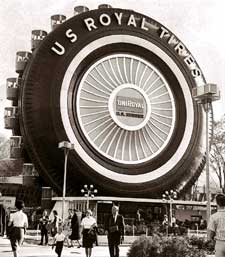
I have that solution. A giant Ferris wheel. "The Wheel," as we would call it, would pick up northbound traffic at Dearborn Street and deposit it at Pine Street (the viaduct portion). Southbound cars would ride The Wheel's below-ground arc from Pine to Dearborn (the tunnel portion). The Wheel would be the centerpiece of a thriving civic park (the surface/park portion). Not only that, The Wheel would be self-financing, environmentally friendly, and fun for the whole family.
Self-financing
The Wheel would require no tax dollars from individuals. The cost of the project, a mere $3.5 billion, would be financed by:
Environmentally friendly
The WaMu Wheel will emit no greenhouse gasses. Treadmills, elliptical trainers, and stationary bicycles from nearby health clubs will supply most of the power.
This pedal power will be supplemented by solar power in July and August, drizzle power (a breakthrough new technology) from September through May, and methane from the droppings of Canada geese. Most of The Wheel will be built from recycled legal documents — interrogatories for the spokes, depositions for the outer rim, and motions for summary judgment for the central axel. It will use neither trans fats nor products manufactured in countries that infringe on human rights or otherwise hurt people's feelings. Only low-flush and semi-flush toilets will be allowed in park restrooms.
Fun, fun, fun
Half a mile high, The Wheel will become the iconic symbol of Seattle and anchor a civic park featuring:
Seattle voters will embrace The WaMu Wheel. Remember, these are people who approved the Seattle Monorail Project in four separate elections. For the unfamiliar, the plan for a modern monorail is difficult to describe without using the words "daffy," "cockamamie," and "meshugener." The original monorail was built as a 1962 World's Fair attraction to carry people from downtown to the fairgrounds. Expanding this cute ride made less sense than extending the Space Mountain Ride from Disneyland to Newhall-Saugus to solve L.A.'s traffic problems. The monorail would have run from West Seattle to Ballard, despite the fact that the only people traveling either direction are homeowners aspiring to trade up. If you wonder how both could be trading up, you've never visited Ballard and West Seattle. Seattle voters finally nixed the monorail after the projected cost rose to $11.4 billion. It still garnered 36 percent of the vote, revealing just how many homeowners in West Seattle and Ballard aspire to trade up.
Campaign Strategy
My WaMu Wheel strategy is to lay low for the next two advisory votes, allowing the viaduct replacement, tunnel, and park factions to destroy each other. I will begin building strength on the fourth ballot and expect to win on the eighth, assuming I am not ambushed by a citizen initiative to make all avenues one-way going north and all streets one-way going west.